ambivalence
am-BIV-uh-luns · noun
The state of having mixed or conflicting feelings about something.
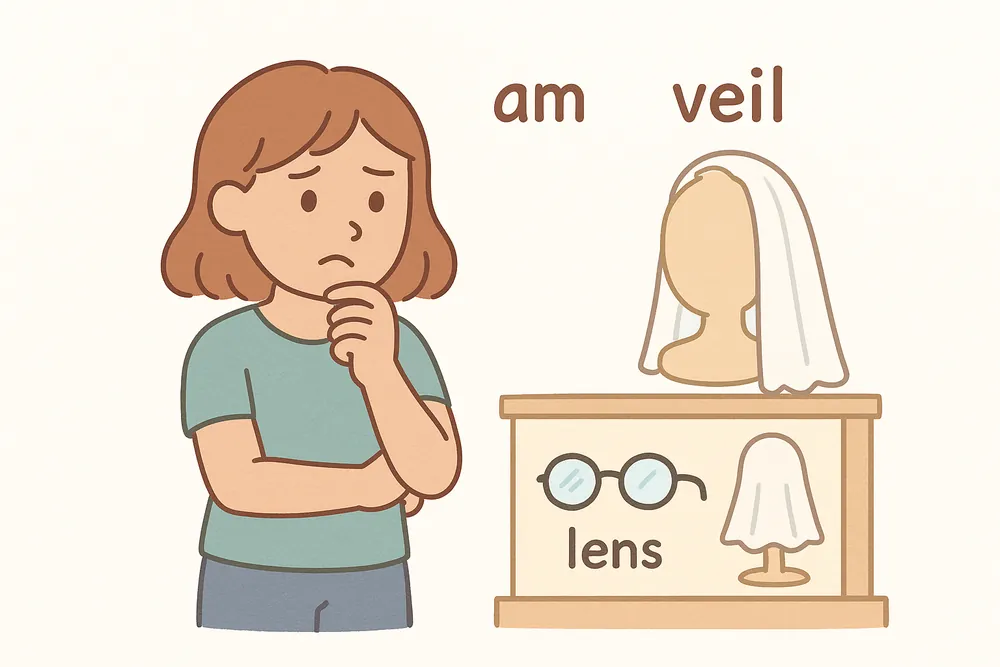
Memory connection
Picture “a veil and lens”
A shopper holds a mysterious veil in one hand and a clear lens in the other, attracted to both and unable to choose.
The sound cue helps you reach the scene; the action in the scene carries you from the scene to the definition.
Use it accurately
Meaning in context
She felt ambivalence about the promotion because it offered influence but required constant travel.
Public ambivalence toward the project appeared in surveys that showed both hope and distrust.
Ambivalence means simultaneous conflicting feelings, not the absence of feeling. It commonly appears as ambivalence about or toward something.
Common patterns
- feel ambivalence
- ambivalence about
- deep ambivalence
Go deeper
Build a more precise understanding
Where the word comes from
Swiss psychiatrist Eugen Bleuler coined German Ambivalenz in the early twentieth century. Its parts evoke forces on both sides: Latin ambi- means “both,” while valentia refers to strength.
Register and usage
Ambivalence names conflicting feelings or attitudes held at the same time. It works in both everyday and analytical writing, commonly followed by about, toward, or over.
Word family
- ambivalent (adjective)
- ambivalently (adverb)
References for further checking
These links provide fuller dictionary and word-history entries. MnemoWords writes its own learner explanation rather than reproducing their definitions.
Quick check
Can you retrieve the meaning?
Which statement shows ambivalence?
Choose an answer, then explain it in your own words.