mitigate
MIT-uh-gayt · verb
To make something harmful, severe, or painful less serious.
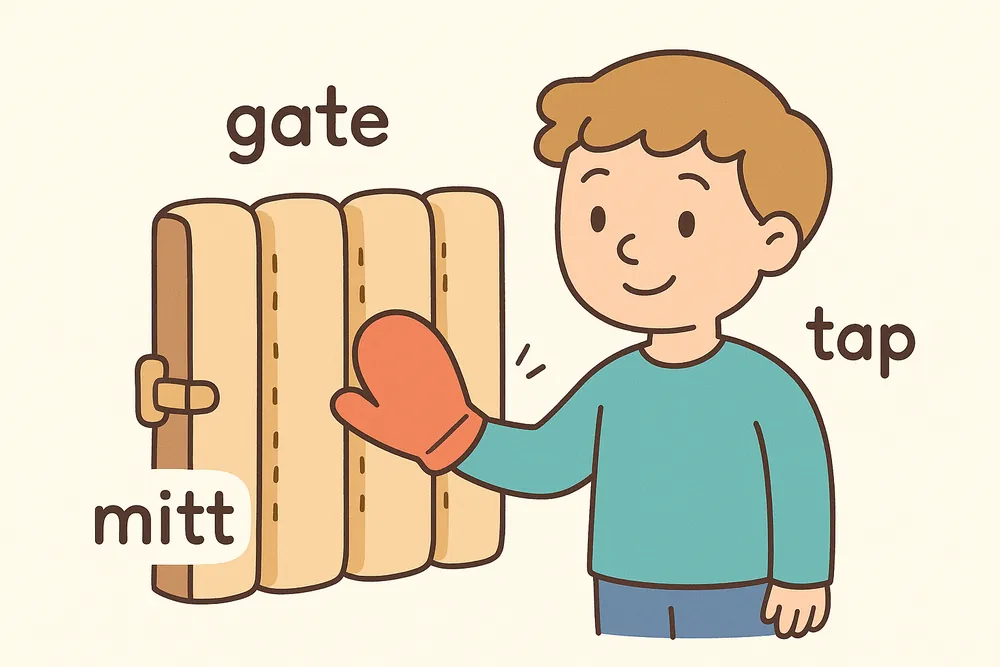
Memory connection
Picture “mitt gate”
Imagine a gate lined with thick baseball mitts. Every hard collision becomes a soft bump, reducing the impact.
The sound cue helps you reach the scene; the action in the scene carries you from the scene to the definition.
Use it accurately
Meaning in context
Wetland restoration can mitigate flooding by absorbing excess water.
The judge considered whether the new evidence might mitigate the sentence.
Mitigate reduces severity or harm; it does not necessarily remove the underlying cause. In formal writing, name the risk or effect being reduced.
Common patterns
- mitigate risk
- mitigate the impact
- mitigating circumstances
Go deeper
Build a more precise understanding
Where the word comes from
Mitigate comes from Latin mitigare, “to soften, tame, or make gentle,” built around mitis, meaning “mild” or “soft.” Its history fits the modern idea of taking the force out of something harmful.
Register and usage
Common in professional, legal, environmental, and technical writing, mitigate usually takes a negative object such as risk, damage, impact, or severity. It describes reduction, not necessarily prevention.
Word family
- mitigation (noun)
- mitigating (adjective)
- mitigable (adjective)
References for further checking
These links provide fuller dictionary and word-history entries. MnemoWords writes its own learner explanation rather than reproducing their definitions.
Quick check
Can you retrieve the meaning?
What would mitigate the risk of sunburn?
Choose an answer, then explain it in your own words.